

New Construction & Renovation Testing
New and newly renovated residential and commercial buildings often contain elevated levels of volatile organic compounds, commonly known as VOCs. These compounds are released from modern construction materials, finishes, and furnishings. Being able to detect and quantify unsafe VOC levels in indoor spaces can help building owners and occupants make informed decisions about indoor air quality and health.

What are VOCs?
Volatile Organic Compounds, also known as VOCs, are carbon based chemicals that easily evaporate into the air at room temperature. Many common products used in construction, renovation, and daily building maintenance release VOCs, especially when they are new. Typical sources include:
- Paints, primers and stains
- Sealants, adhesives and caulks
- Flooring materials, rugs and carpet
- Composite wood products
- Cabinetry
- Insulation and spray foam
In new and newly renovated residential and commercial buildings, many of these materials are introduced at the same time. As they cure, dry, and off gas, the combined emissions can significantly raise indoor VOC concentrations.
How Volatile Organic Compounds (VOCs) Affect Indoor Air Quality
VOC levels are often much higher indoors than outdoor levels, sometimes as much as five to ten times. VOCs can cause a host of health issues. Short term exposure to elevated VOCs can cause:
- Headaches and pressure in the head or sinuses
- Irritated eyes, nose or throat
- Fatigue, brain fog or difficulty concentrating
- Coughing, wheezing or worsening asthma or allergy like symptoms
Some VOCs, including formaldehyde and benzene, are classified by health agencies as probable or known human carcinogens. Short and long-term exposures to certain VOCs may be associated with more serious and lasting health effects.
Unfortunately, smell alone is not a reliable indicator of risk. Some of the most toxic VOCs have little to no odor, while noticeable odors may come from compounds that are less concerning. Without testing, it is difficult to know what is actually present in the air.
Why New and Newly Renovated Buildings Are at Higher Risk
Modern buildings are designed to be energy efficient and tightly sealed. While this improves comfort and reduces energy costs, it also limits natural air exchange that would otherwise dilute indoor pollutants. In new and newly renovated residential and commercial buildings, VOC sources are often fresh and abundant. Paints are curing, adhesives are off gassing, and new cabinets, countertops, and furnishings continue releasing chemicals over time.
Without sufficient ventilation or careful material selection, VOC levels can remain elevated for months to years. This is especially important to consider in offices, schools, healthcare facilities, and homes due to the extensive amount of time that they are consistently occupied.
How Volunteer Mold Can Help
Because VOC exposure cannot be accurately judged by odor or appearance, professional testing is the only way to understand indoor air quality and safety. Volunteer Mold provides VOC assessments using advanced laboratory methods such as SIFT MS, which allows for the detection and identification of hundreds of individual VOCs at very low concentrations.
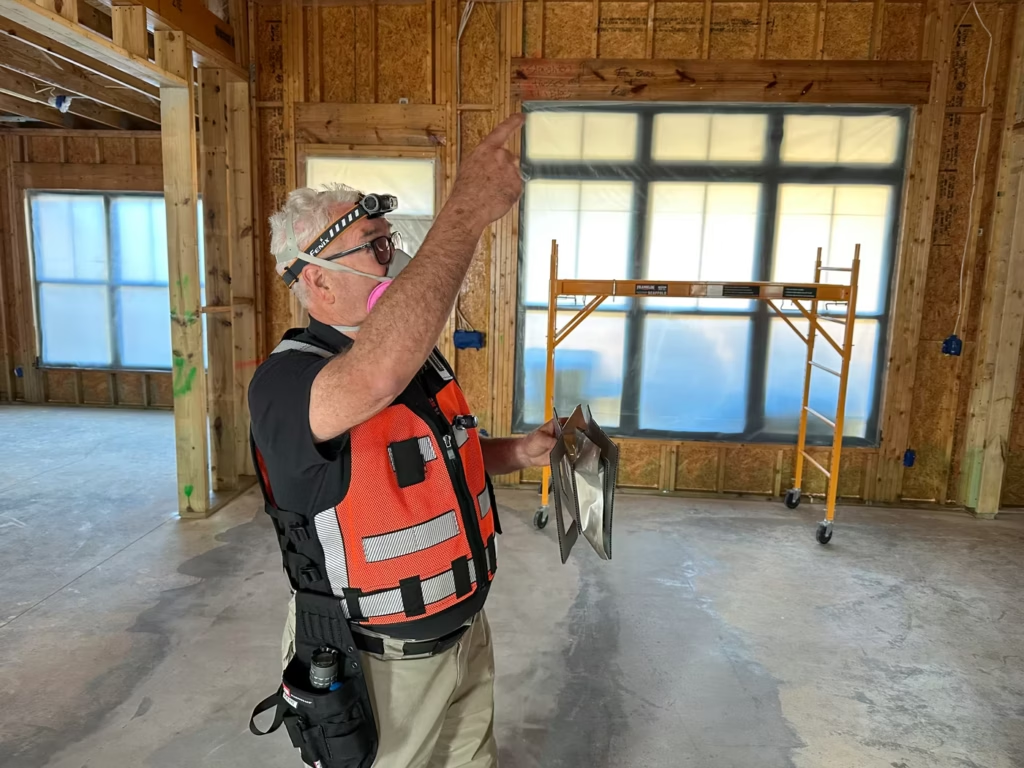
Our process begins with a consultation and review of construction or renovation history as well as on site inspection. Then, we follow up with professional sampling and laboratory analysis to produce consistent reliable results. These testing results are compared to industry standard health based guidelines and toxicological reference values. This allows for practical, science based recommendations related to ventilation, source control, or further evaluation when needed.